Prisync: competitor price tracking and repricing
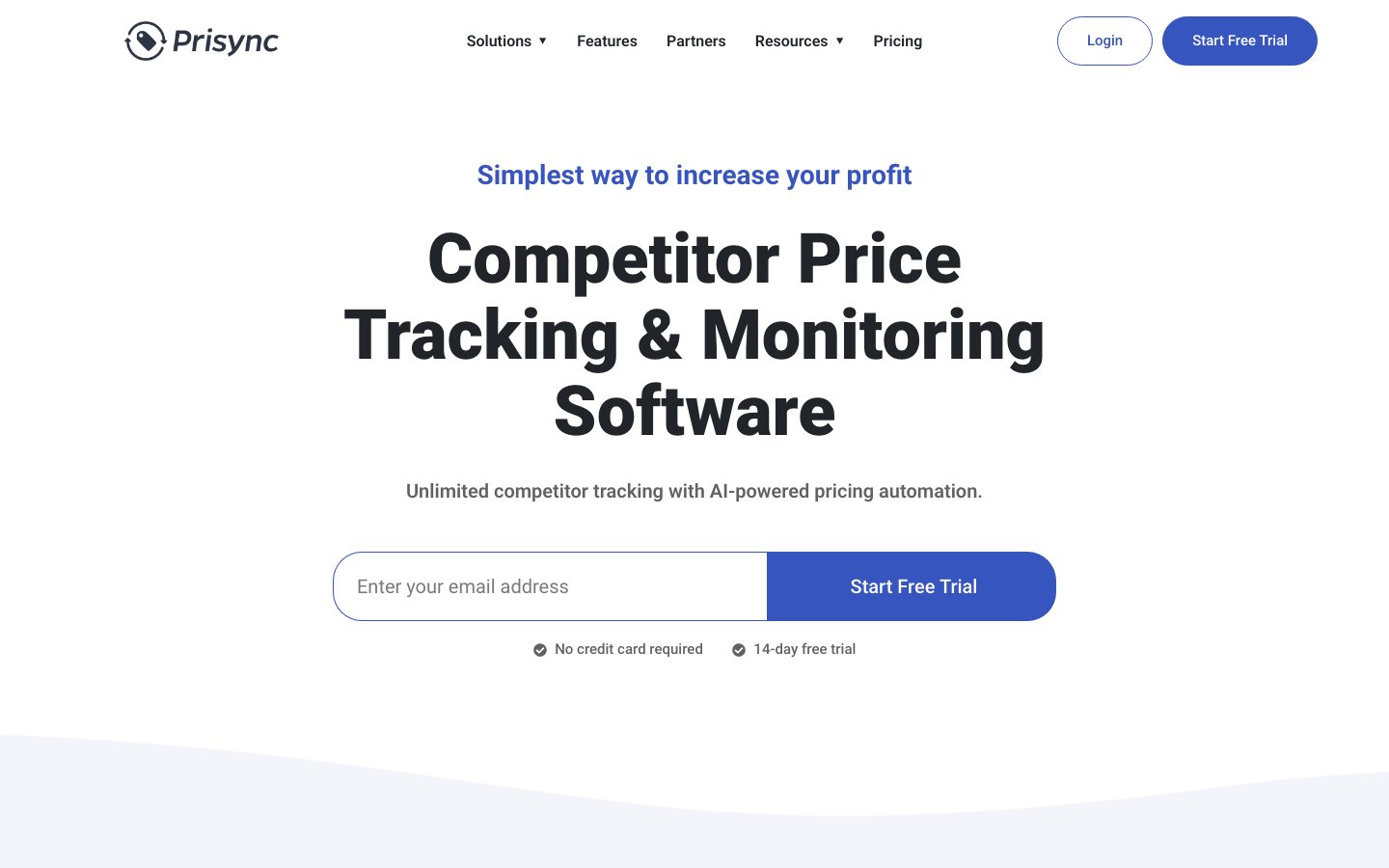
Prisync helps ecommerce teams monitor competitors’ selling prices and stock availability, then adjust their own prices using rules. Teams can track selected product links or supported sales channels, with different plans for monitoring and automatic price changes.
- Views
- 0
- Uses
- 0
- Favorites
- 0
- Editorial Score
- 73/100
Prisync features and workflows
Prisync helps ecommerce teams monitor competitors’ selling prices and stock availability, then adjust their own prices using rules. Teams can track selected product links or supported sales channels, with different plans for monitoring and automatic price changes.
- URL-based tracking monitors unlimited competitors for each included product and updates manually added URLs three times per day
- Channel and marketplace monitoring can match products at larger scale, generally with daily updates
- Dashboards and alerts show competitor price, stock availability, historical movement, index position, and product variants
- Premium and higher plans add dynamic pricing rules that can update supported storefront prices within merchant-set boundaries
- Excel export, scheduled reports, API access, and integrations move competitor data into operating workflows
- A managed matching service is available when manual competitor URL collection is not practical
Best Fit & Use Cases
Best for teams that regularly compare prices on matching products and want to reduce manual checks. Before enabling automatic price changes, the team needs clear competitor matches, minimum selling prices and a way to review unusual changes.
Prisync pricing and plans
Prisync offers URL Based, Channel Based and Hybrid monitoring. Shopify App Store subscriptions have their own prices and must be compared separately.
URL Based
| Product or purchase option | Scope | Public price and status |
|---|---|---|
| Professional | URL Based competitor monitoring. Included plan entitlements
| $99/month |
| Premium | URL Based competitor monitoring. Included plan entitlements
Optional add-ons
| $199/month |
| Platinum | URL Based competitor monitoring. Included plan entitlements
Optional add-ons
| $399/month |
Channel Based
| Product or purchase option | Scope | Public price and status |
|---|---|---|
| Professional | Channel Based competitor monitoring. Included plan entitlements
Optional add-ons
| $199/month |
| Premium | Channel Based competitor monitoring. Included plan entitlements
Optional add-ons
| $399/month |
| Platinum | Channel Based competitor monitoring. Included plan entitlements
Optional add-ons
| $599/month |
Hybrid
| Product or purchase option | Scope | Public price and status |
|---|---|---|
| Professional | Hybrid competitor monitoring. Included plan entitlements
Optional add-ons
| $299/month |
| Premium | Hybrid competitor monitoring. Included plan entitlements
Optional add-ons
| $599/month |
| Platinum | Hybrid competitor monitoring. Included plan entitlements
Optional add-ons
| $799/month |
Shopify App Store plans
| Product or purchase option | Scope | Public price and status |
|---|---|---|
| Professional | Shopify App Store subscription; channel-specific purchase terms apply. Included plan entitlements
| $49/month |
| Premium | Shopify App Store subscription; channel-specific purchase terms apply. Included plan entitlements
Optional add-ons
| $199/month |
| Platinum | Shopify App Store subscription; channel-specific purchase terms apply. Included plan entitlements
Optional add-ons
| $399/month |
Website plans have a 14-day trial. More than 5,000 products and competitor-matching services require a quote. Whether website API and channel surcharges apply to Shopify plans requires confirmation. View official pricing details
Prisync alternatives compared
Prisync, Polar Analytics, Triple Whale, and Shopify Sidekick are compared by product scope, suitable tasks, implementation responsibilities and billing.
| Product | Product scope | Best-fit scenarios and implementation responsibilities | Pricing and billing |
|---|---|---|---|
| PrisyncCurrent product | Prisync helps ecommerce teams monitor competitors’ selling prices and stock availability, then adjust their own prices using rules. | Best fitConsider Prisync for competitor price and stock monitoring with rule-based repricing. Compare Polar Analytics for bringing store and marketing metrics into shared business reporting and Triple Whale for store profitability and marketing measurement in a shared dashboard. ImplementationYour team would map competitor products, define repricing rules and review the monitoring results. | |
| Polar Analytics | Polar Analytics is a managed ecommerce data and business-intelligence platform for shared reporting and marketing activation. | Best fitConsider Polar Analytics for bringing store and marketing metrics into shared business reporting when comparing it with Prisync. ImplementationWith Polar Analytics, your team would connect data sources, define metrics and maintain reporting views. Official product and workflow ↗ | A comparable current amount has not been confirmed for this purchase scope; use the official pricing source to check the plan, billing unit and additional charges. Official pricing ↗ |
| Triple Whale | Triple Whale brings ecommerce and advertising data together for attribution and analysis. | Best fitConsider Triple Whale for store profitability and marketing measurement in a shared dashboard when comparing it with Prisync. ImplementationWith Triple Whale, your team would connect store and ad data, configure tracking and review attribution assumptions. Official product and workflow ↗ | A comparable current amount has not been confirmed for this purchase scope; use the official pricing source to check the plan, billing unit and additional charges. Official pricing ↗ |
| Shopify Sidekick | Shopify Sidekick is an AI assistant inside Shopify admin that helps merchants understand store performance and complete everyday store work. | Best fitConsider Shopify Sidekick for store-aware analysis and assisted actions inside Shopify admin when comparing it with Prisync. ImplementationWith Shopify Sidekick, your team would describe the task, review proposed changes and confirm permitted actions. Official product and workflow ↗ | Confirm current billing terms before buying. Included with a Shopify subscription; confirm account eligibility and the underlying Shopify plan separately. Official pricing ↗ |
Selection advice
Track known competitors before automating price changes
Prisync is a useful starting point when the team already knows which competing products to watch. Its URL-based Professional plan is $99 per month for up to 100 products and tracks competitor prices and availability. Automatic repricing starts with Premium at $199 per month; a team that only needs price checks should compare the monitoring plan first.
Compare PriceMole for Shopify repricing
PriceMole’s $99-per-month Starter plan includes support for 100 products and automated repricing, making it worth comparing with Prisync Premium for Shopify stores. Check that each tool matches the correct product variant and allows the required price floor before it changes selling prices. Prisync’s URL, sales-channel and hybrid monitoring plans have different prices, so compare the same products and channels.
Larger pricing decisions need more than competitor monitoring
For pricing decisions across a large catalog and several sales channels, also assess Competera’s pricing platform. The decision is whether the team needs to monitor competitors and apply rules, or build pricing around broader demand and business targets. Prisync charges an extra 20% for API access; include that cost if a developer must connect the price data to another system.
Prisync FAQs
Prisync FAQs address “Should a store choose Prisync URL, Channel, or Hybrid tracking?” and “Are automatic repricing and API access included in every Prisync plan?”
Should a store choose Prisync URL, Channel, or Hybrid tracking?
URL tracking follows competitor links supplied by the team. Channel tracking discovers competing offers within a sales channel, while Hybrid combines both. The choice depends on whether the store already has a stable competitor URL list or needs help finding sellers.
Are automatic repricing and API access included in every Prisync plan?
No. The comparison table lists the dynamic pricing engine for Premium and Platinum. API access is an additional paid option for those tiers, so competitor monitoring alone should not be treated as including every repricing or integration feature.
Does Prisync offer a trial without a credit card?
Yes. Prisync advertises a 14-day trial without a credit card. The trial is useful for checking product matching and competitor coverage before choosing the tracking method and product allowance for a paid plan.
How do product limits affect the cost of a large Prisync catalog?
Prisync's plan comparison separates product allowances from the number of competitors tracked. A large catalog can therefore require a higher product tier even when competitor tracking is unlimited. The number of products to monitor is a more useful starting point than competitor count alone.
Official sources: Pricing and plans
Prisync integrations and connection requirements
Import your Shopify products, prices and stock into Prisync, then send rule-based price updates back to your store. Install the Prisync Shopify app and choose a plan that includes the repricing features you need.
Official connection guideSources
The sources for Prisync include apps.shopify.com, prisync.com; the linked documents are references for checking product, purchase or review information, with applicability still to be verified.
User reviews
The Prisync review section lets readers submit their own experience; submitted reviews are separate from the page’s editorial assessment.